Table of contents
The dynamic field of graphic design is currently experiencing a transformative shift, blending time-honored methods with cutting-edge artificial intelligence. This comparative analysis explores the unique strengths, processes, and outcomes of traditional versus AI-driven graphic design techniques. Delve into the following sections to uncover fresh perspectives on creativity, workflow, and the future of visual communication.
Foundations of traditional design
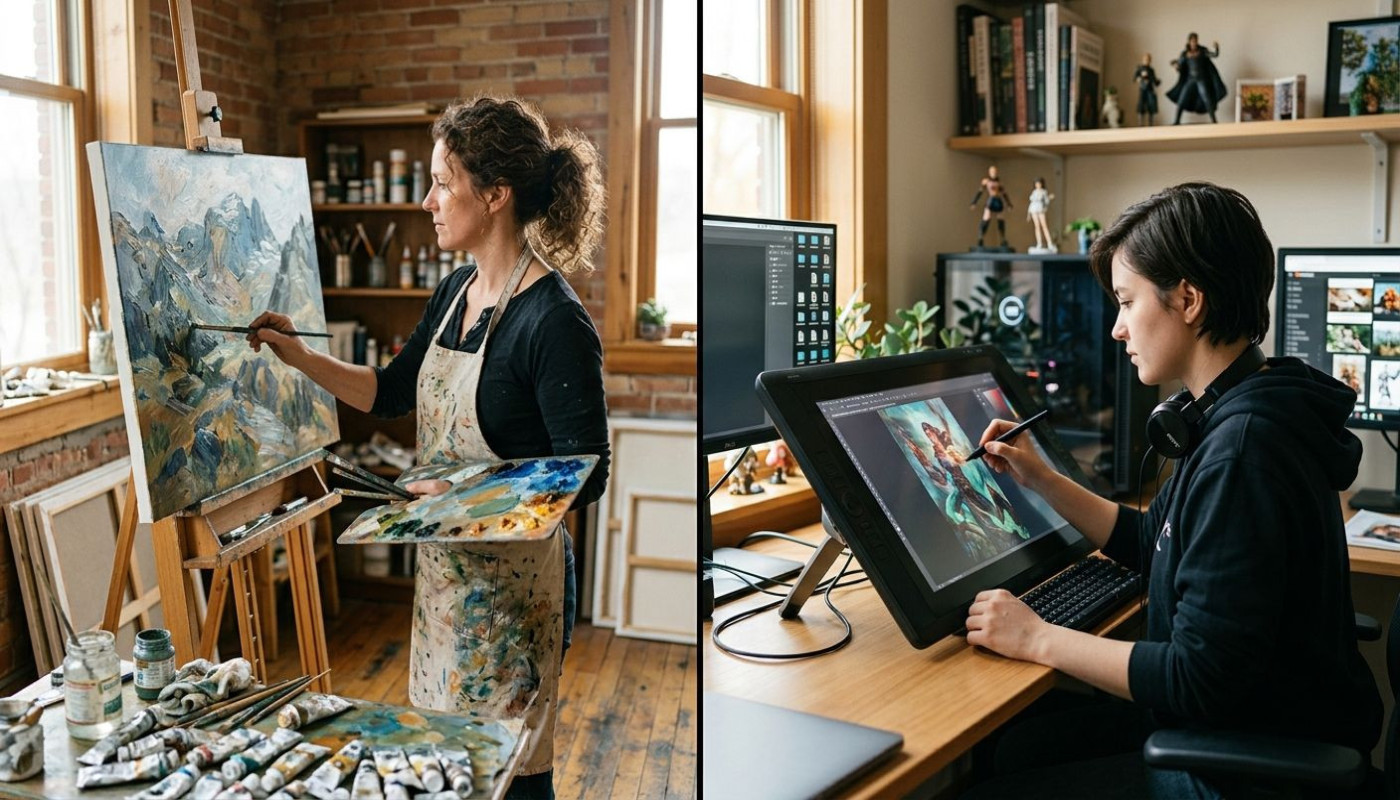
Traditional graphic design rests on a robust set of design fundamentals, meticulously cultivated through centuries of artistic evolution. Manual techniques form the backbone of this discipline, requiring designers to possess strong skills in color theory, layout composition, and typography mastery. The creative process in traditional graphic design is often characterized by the tactile manipulation of materials, with hand-drawn illustration playing a pivotal role in visual communication. Gestalt principles are intrinsic to this approach, guiding the organization of visual elements to create cohesive and harmonious designs. Mastery of these foundational concepts enables designers to effectively convey messages and evoke emotional responses through balance, contrast, and spatial relationships, all achieved without digital shortcuts.
Within the context of traditional graphic design, a comprehensive understanding of color interactions and typographic nuances is indispensable. The designer’s ability to manually arrange elements, experiment with physical media, and integrate illustrative details demonstrates a deep commitment to craftsmanship. Time-honored manual techniques demand patience and precision, encouraging thoughtful exploration of visual relationships and fostering innovation within established constraints. Leading design historians emphasize that these design fundamentals continue to inform and inspire contemporary practice, underscoring the enduring relevance of foundational skills in the ever-shifting landscape of visual communication.
Emergence of AI in design
Artificial intelligence in art has rapidly transformed the landscape of graphic design, ushering in a new era defined by AI graphic design, machine learning, and advanced design automation. Creative professionals are now leveraging algorithms and neural networks to streamline complex tasks that once required hours of manual effort, such as resizing assets, enhancing images, and even generating entirely new compositions. Through the integration of generative design, machine learning models analyze vast datasets to identify patterns and preferences, enabling the creation of visuals that are both innovative and tailored to user needs. These technologies not only augment human creativity but also allow designers to automate repetitive processes, freeing them to focus on conceptual development and refinement.
As AI graphic design tools become increasingly sophisticated, the field continues to evolve with the introduction of platforms capable of producing high-quality digital art at scale. Design automation now plays a pivotal role in branding, advertising, and content creation, offering both speed and adaptability previously unattainable with traditional methods. The application of neural networks enables systems to interpret artistic styles and mimic them, generating unique, client-specific artwork. For those interested in exploring the latest advancements, why not check here to discover some of the most innovative AI tools for image creation currently available to designers.
Comparing creative processes
The creative workflow in graphic design has undergone transformative changes with the introduction of AI-driven tools. Traditional approaches rely heavily on human creativity and design thinking, where designers progress through hands-on stages of idea generation, sketching, prototyping, and client feedback. In this setting, design iteration is deeply personal and often involves cycles of manual revision and expert judgment, fostering a collaborative atmosphere between team members and stakeholders. In contrast, AI-driven techniques accelerate the process by automating initial idea generation and allowing rapid design iteration through advanced algorithms. While this can streamline routine tasks, the dynamic of AI collaboration redefines design thinking, as creatives shift their focus from pure creation to curating and fine-tuning AI-generated options. This integrated approach not only speeds up the workflow but also enables new forms of collaboration, where human insight guides machine efficiency, bridging the gap between imagination and execution in unprecedented ways.
Impact on efficiency and scalability
Traditional graphic design methods often center around manual processes, where design efficiency relies heavily on an individual's expertise and work speed. This hands-on approach can result in highly custom graphics but may also extend project timelines, especially when adapting visuals for multiple platforms. In contrast, AI-driven techniques leverage advanced time-saving tools and automation pipelines, dramatically improving rapid prototyping capabilities and minimizing repetitive tasks. Such systems streamline scalable design, enabling teams to quickly adjust core assets for diverse digital and print environments without sacrificing quality or brand consistency. According to the chief operations officer of a leading design organization, integrating AI not only accelerates delivery but also enhances the capacity to produce personalized content at scale, allowing designers to focus on creative innovation while routine adjustments are handled automatically.
Future trends and ethical concerns
The future of graphic design is being shaped by rapid advances in AI technologies, with ongoing debates about the implications for creative authenticity and ethical design. As AI-driven tools become more capable of generating complex visuals and assisting in creative workflows, the question of authorship and originality becomes increasingly nuanced. AI trends suggest that designers will increasingly collaborate with intelligent systems, leveraging the strengths of both human intuition and machine efficiency. This human-machine collaboration may lead to novel aesthetics and workflows, but also raises concerns over the dilution of individual artistic voice and the potential homogenization of visual culture. The future of graphic design therefore depends on maintaining a careful balance between automation and the irreplaceable insights offered by human creativity.
Ethical design is another focal point as AI systems are integrated into creative processes. Algorithmic bias poses significant risks, especially when machine-generated content inadvertently reinforces stereotypes or excludes minority perspectives. Designers must remain vigilant, not only in curating data used to train AI but also in critically reviewing outputs for fairness and inclusivity. The evolution of graphic design will also demand new frameworks for transparency, where audiences can discern the extent of machine involvement in the creative process. Ultimately, addressing the intersection of creative authenticity and technological progress requires persistent engagement with ethical standards, safeguarding both the integrity of the design profession and the diversity of visual communication.
Similar

When A Simple Contract Becomes A Civil Dispute: Warning Signs To Watch

What No One Tells You About Moving Services In Busy Urban Centers

Can Transparent Tax Strategies Make Your Brand's Reputation Bulletproof?

The Hidden Costs Of Over-automating Your Business Strategy

Invest in Meydan: discover this brand-new luxury complex in the heart of Dubai’s lagoons

Understanding The Nuances Of Swiss Banking And Finance Law

How To Choose A Budget-friendly Shared Workspace?

Flexible Work Options: The Rise Of Shared Workspace Subscriptions
How Can Small Businesses Benefit From Streamlined Container Management Platforms?

Exploring The Growth Of Fintech And Cryptocurrency Licensing

Exploring The Impact Of Professional Web Design On Business Growth

Exploring Strategies For Effective Application Scaling In Cloud Environments

Exploring niche markets for unique business opportunities

Best practices for remote team management in startups

Exploring The Advantages Of Different Business Zones For Startups

How Next-gen JavaScript Enhances Site Visibility And User Engagement

How To Evaluate The Impact Of CRM On Business Efficiency

How Outsourcing Innovative Solutions Can Transform Operational Efficiency And Business Growth

The Role Of DDoS Protection In Maintaining A Company's Online Reputation

The Impact Of GPT Chatbots On Small Business Efficiency

How Digital Marketing Tools Are Influencing Businesses Growth

Implementing an All-in-One Dashboard to Boost Sales and Project Management
